

Have you ever wondered what it takes to design cutting-edge chips like those powering the latest iPhones? From blazing-fast performance to energy efficiency, modern mobile processors are masterpieces of engineering. If your ambition is to play a part in building chips of the future, Bangalore — India’s premier tech hub — offers the ideal ecosystem to begin your journey.
In this blog, we’ll walk you through how to start your VLSI and chip design career in Bangalore, what skills you need, and why ChipXpert is one of the best places to build those skills and step confidently into the semiconductor world.
Why Bangalore Is the Right Place to Begin
Bangalore is often called the Silicon Valley of India, and for good reason. It is home to:
- Major semiconductor R&D centers
- Global chip design teams
- Technology startups and hardware innovators
The city hosts offices of many companies at the forefront of chip design and verification. For an aspiring engineer, this translates into greater access to internships, hands-on exposure, and real placement opportunities. Bangalore’s industry network also means more events, workshops, seminars, and tech meetups that help you stay current with emerging technologies.
Essential Skills You Need Before You Begin
Designing chips is a complex task that requires a mix of strong fundamentals and practical experience. Before diving into any training program, you should build a strong base in:
Digital Logic and Circuit Fundamentals
You must understand digital circuits, logic gates, flip-flops, and timing behavior. These are the building blocks of chip design.
RTL Design with Hardware Description Languages
Verilog and SystemVerilog are the languages of choice for hardware design. You need to be comfortable writing synthesizable RTL code that maps to real silicon.
Verification and Testbench Methodologies
Writing code that works isn’t enough — you must verify it. Verification methodologies such as UVM (Universal Verification Methodology) are essential to validate your design through simulation.
Practical Tool Knowledge
Chip design isn’t complete without experience with industry-standard EDA tools for simulation, synthesis, timing analysis, and verification.
Why Training and Mentorship Matter
You can find plenty of theory in books and online forums. However, to design chips like the iPhone SoC teams do, you must understand real industry workflows and practices.
Here’s where structured training makes a difference:
Project-Based Learning
Working on guided, real-world projects gives you context and confidence. Instead of theory alone, you learn how things are done in actual design teams.
Access to Industry Tools
Simulation environments, synthesis flows, and timing analysis tools are used every day in real chip design. Being comfortable with them gives you a significant edge.
Mentorship from Experienced Engineers
Learning from someone who has worked on live chip design or verification projects helps you understand the why behind every decision — something textbooks rarely explain.
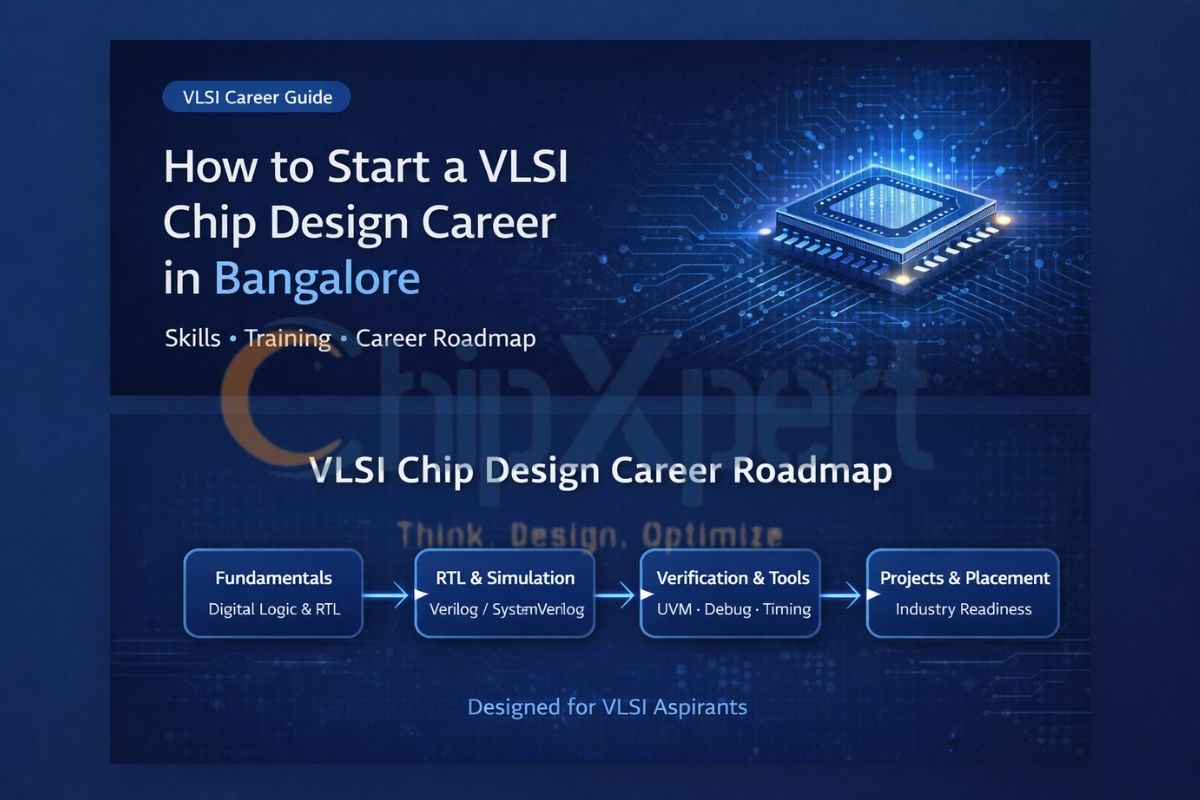
How to Start Your Chip Design Journey in Bangalore
Here’s a practical roadmap to get started:
1. Build Strong Fundamentals
Begin with courses that cover:
- Digital logic
- Computer organization
- Introduction to hardware description languages
This foundational understanding makes advanced topics much easier to grasp.
2. Learn RTL and Simulation
Move on to hands-on RTL design using Verilog or SystemVerilog. Practice writing modules, testbenches, and simulate them using tools like industry-standard simulators or VCS to observe waveform behavior.
3. Master Verification Methodologies
Verification is a major part of modern chip design. Join structured training that takes you through verification flows, UVM methodology, coverage analysis, and debug strategies.
4. Gain Practical Project Experience
Nothing prepares you better than working on complete mini-projects — from RTL to simulation, verification, and reporting. This is the stage where theory becomes practical skill.
5. Use Industry Tools
Learn to navigate EDA tools such as:
- Simulation tools (industry-standard simulators, VCS)
- Synthesis tools (industry-standard EDA tools DC)
- Static timing and analysis flows
This exposure is vital for interviews and job performance.
6. Prepare for Interviews and Placement
Once you build skills and projects, focus on resume building, mock interviews, and problem-solving sessions. Understand what recruiters look for and how to present your experience confidently.
Where ChipXpert Fits In
At ChipXpert, we have designed our VLSI training programs to be industry-aligned, project-driven, and placement-oriented. Our approach helps you not just learn, but apply and perform.
Here’s what sets ChipXpert apart:
- Comprehensive curriculum from basics to advanced topics
- Real-world projects and case studies
- Training on industry tools and workflows
- Dedicated mentorship from working professionals
- Placement assistance and interview preparation
Whether you are just starting your VLSI journey or looking to enhance your skills for better opportunities, ChipXpert provides the support you need.
Bangalore’s Advantage for VLSI Learners
Being in Bangalore gives you additional advantages beyond training:
Higher Exposure to Recruiters
Global companies and startups alike seek talent locally, making it easier to attend interviews, internship drives, and placement events.
Networking Opportunities
Regular industry conferences, tech talks, and VLSI meetups help you connect with professionals and hiring managers.
Cross-Domain Learning
Bangalore’s tech ecosystem includes software, hardware, AI, cloud, and embedded systems. Exposure to these areas gives you a broader context — a valuable differentiator in your career.
Final Thoughts
Designing the next generation of chips — like those found in flagship devices — requires dedication, strong fundamentals, and practical experience. Starting your journey in Bangalore, with a structured roadmap and the right training institute, can accelerate your path from learner to industry-ready professional.
If you aspire to be among the engineers who shape tomorrow’s silicon, begin with a clear plan, focused learning, and industry-aligned mentorship. With the right guidance and consistent effort, the world of advanced chip design is well within your reach.
Ready to begin? Your VLSI journey starts now.
Train in Bengaluru: see ChipXpert’s VLSI training in Bangalore at the Bellandur centre — Physical Design, Verification, DFT, RTL and Analog Layout, with 24×7 industry-standard EDA tools lab access.
Share your question in comments or talk to our mentor team for batch guidance.
Need Fee, Duration, or Demo Class Details?
Talk to our admin team for the latest batch plan and career guidance.
Contact Admin TeamAsk the Admin Team
Drop your basic question in comments: eligibility, prerequisites, tools, fee range, and placement support.
Our team reviews and responds regularly.