

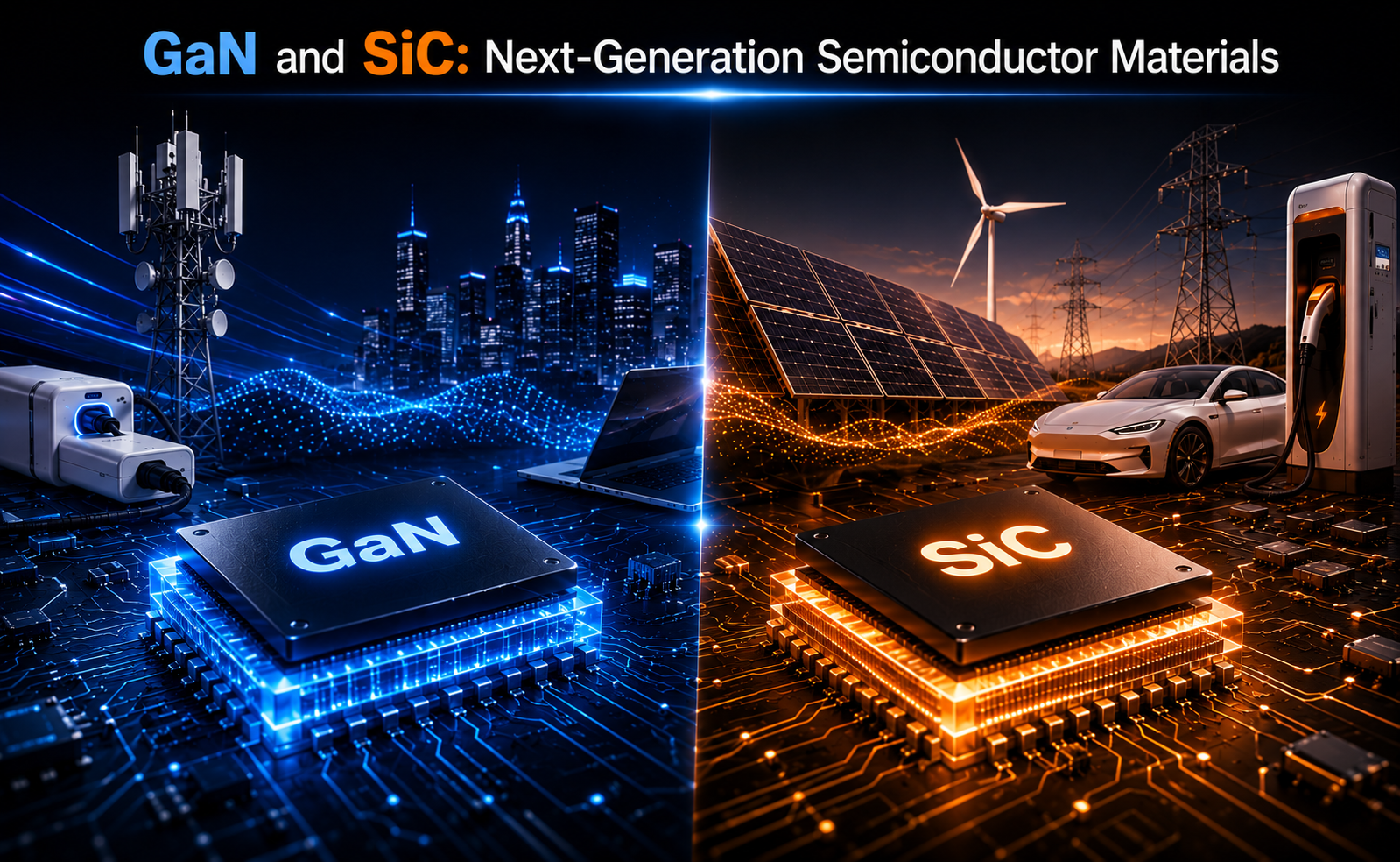
The semiconductor industry is moving beyond traditional silicon technology as modern applications demand higher efficiency, faster performance, and better thermal management. Gallium Nitride (GaN) and Silicon Carbide (SiC) are two advanced wide-bandgap semiconductor materials that are transforming power electronics, electric vehicles, renewable energy, and communication systems.
Unlike conventional silicon devices, GaN and SiC can operate at higher temperatures, handle greater power levels, and reduce energy losses, making them key materials for future electronic innovations.
Understanding Wide-Bandgap Semiconductors
Wide-bandgap semiconductors have a larger energy gap between their valence and conduction bands, allowing them to perform efficiently under extreme conditions.
GaN and SiC offer:
- Higher voltage capability
- Faster switching speeds
- Lower power losses
- Improved energy efficiency
- Better thermal performance
These properties make them ideal for next-generation electronic systems.
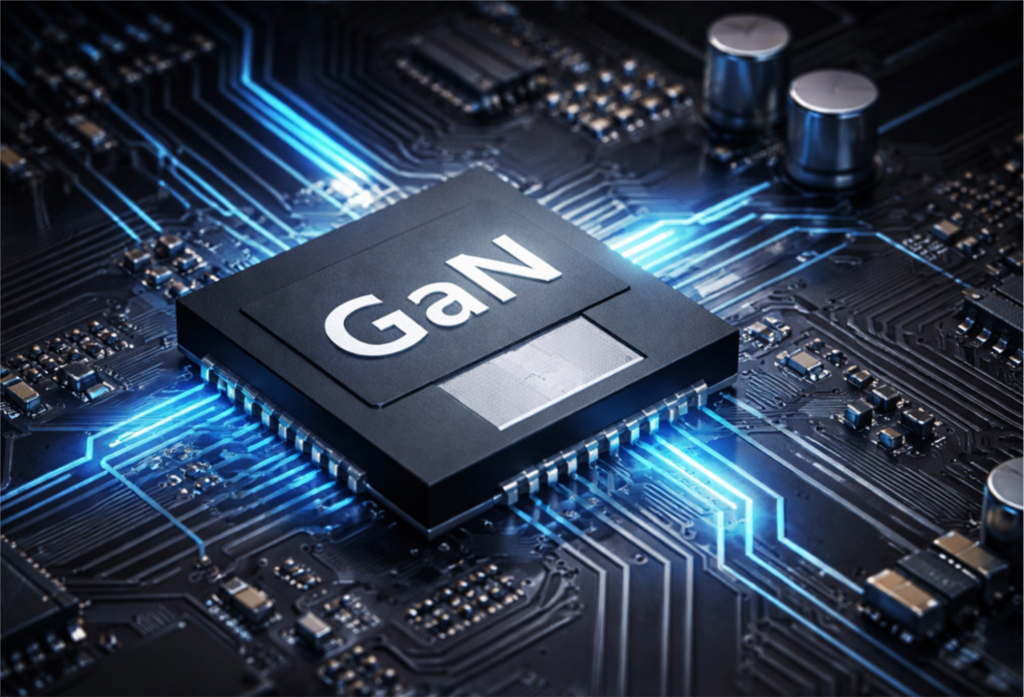
Gallium Nitride (GaN): Powering High-Speed Electronics
Gallium Nitride is known for its exceptional switching speed and high-frequency performance. It enables smaller, faster, and more efficient electronic devices.
Key Advantages:
- High-speed switching
- Compact device design
- Low energy loss
- Excellent performance at high frequencies
Major Applications:
- Fast chargers
- 5G communication systems
- RF electronics
- Consumer electronics
GaN technology is helping create smaller devices with improved performance and efficiency.
Silicon Carbide (SiC): Driving High-Power Applications
Silicon Carbide is designed for high-power and high-temperature environments. Its superior thermal conductivity and voltage handling capability make it essential for advanced power systems.
Key Advantages:
- Handles high voltages
- Reduces heat generation
- Improves power conversion efficiency
- Enhances system reliability
Major Applications:
- Electric vehicles
- Solar inverters
- Industrial power systems
- Energy storage solutions
SiC plays a major role in building efficient and sustainable energy systems.
GaN vs SiC: Different Strengths, Same Future
Although both materials are wide-bandgap semiconductors, they serve different purposes.
GaN focuses on:
- Speed
- High-frequency operation
- Miniaturization
SiC focuses on:
- High power
- High voltage
- Thermal efficiency
Together, they are expanding the possibilities of modern semiconductor design.
Future of GaN and SiC Technology
As demand grows for electric vehicles, AI data centers, renewable energy, and advanced communication networks, GaN and SiC will become increasingly important.
These materials represent the next step in semiconductor evolution by enabling electronics that are:
- More efficient
- Smaller
- Faster
- More reliable
The future of semiconductor technology is not only about smaller chips it is about smarter and more powerful materials.
Conclusion
GaN and SiC are redefining the future of electronics by overcoming the limitations of traditional silicon technology. With their superior performance, efficiency, and reliability, these next-generation materials are becoming the foundation of future power and high-performance semiconductor systems.
Share your question in comments or talk to our mentor team for batch guidance.
Ask the Admin Team
Drop your basic question in comments: eligibility, prerequisites, tools, fee range, and placement support.
Our team reviews and responds regularly.