

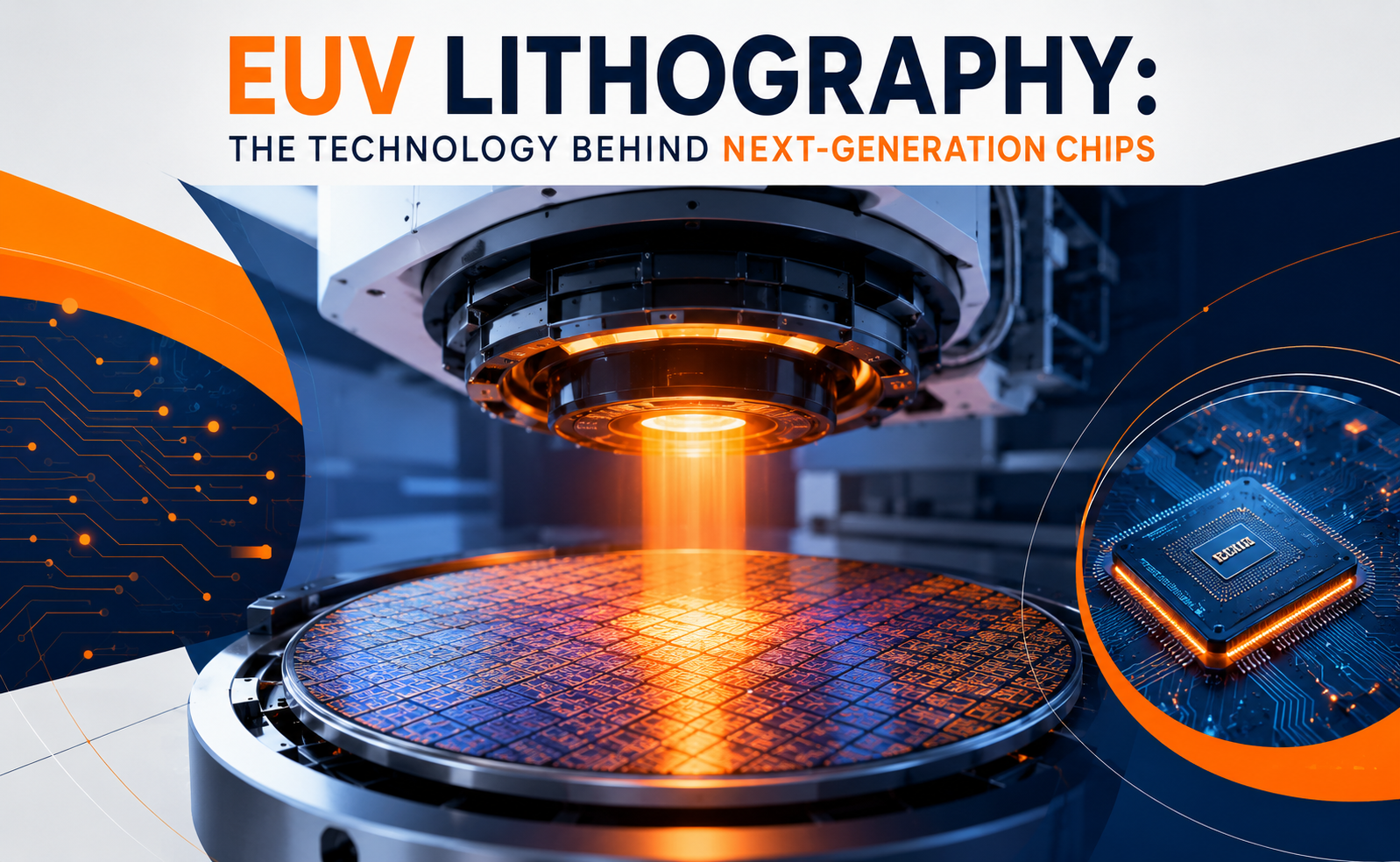
The demand for faster, smaller, and more efficient chips has pushed semiconductor technology beyond traditional limits. Extreme Ultraviolet (EUV) Lithography is one of the biggest breakthroughs enabling the production of advanced chips used in AI, smartphones, data centers, and high-performance computing.
EUV allows manufacturers to create extremely small circuit patterns with higher precision, making it a key technology for modern semiconductor innovation.
What is EUV Lithography?
EUV Lithography is an advanced chip manufacturing technique that uses 13.5nm wavelength ultraviolet light to print tiny circuit designs onto silicon wafers.
Unlike traditional lithography, EUV enables:
- Smaller transistor sizes
- Higher chip density
- Better performance
- Lower power consumption
It plays a major role in advanced process nodes like 5nm and 3nm technologies.
Why is EUV Important?
As transistor sizes shrink, traditional manufacturing methods become more complex. EUV solves these challenges by providing extremely precise patterning.
Key advantages:
- Enables next-generation processors
- Reduces manufacturing complexity
- Improves chip efficiency
- Supports AI and advanced computing systems
EUV helps continue the semiconductor industry’s scaling journey.
How Does EUV Lithography Work?
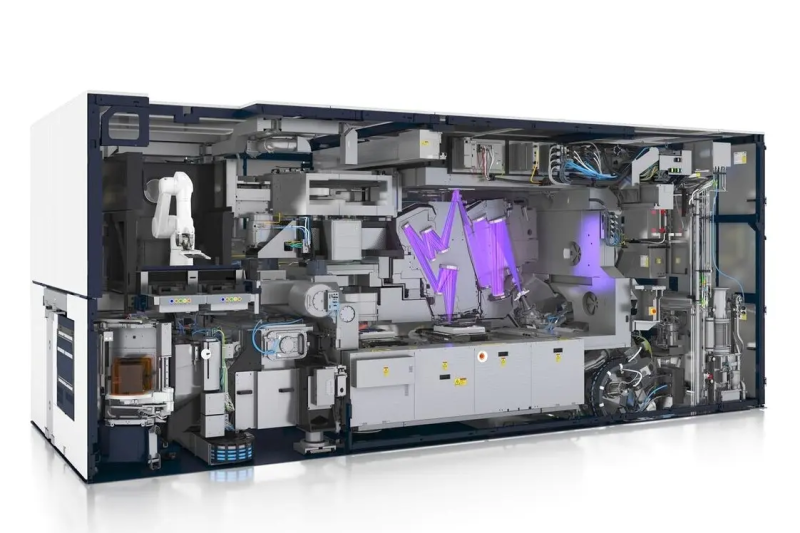
EUV lithography uses a powerful laser to generate extreme ultraviolet light from tin plasma.
The process includes:
- Creating EUV light
- Reflecting light using advanced mirrors
- Transferring patterns onto wafers
- Developing tiny circuit structures
Because EUV light is easily absorbed, the entire process operates inside a high-vacuum environment.
Challenges of EUV Technology
Although EUV is revolutionary, it comes with major engineering challenges:
- Extremely complex equipment
- High manufacturing cost
- Difficult defect control
- Requires advanced optical systems
Maintaining accuracy at nanometer scale is one of the biggest challenges in chip fabrication.
Future of EUV Lithography
EUV continues to evolve with technologies like High-NA EUV, enabling even smaller chip designs.
Future applications include:
- AI processors
- Quantum computing systems
- Advanced GPUs
- Next-generation semiconductor devices
EUV will remain a foundation of future chip innovation.
Conclusion
EUV Lithography has transformed semiconductor manufacturing by enabling smaller, faster, and more powerful chips.
As technology moves toward advanced nodes and intelligent computing, EUV will continue driving the next generation of semiconductor breakthroughs.
Share your question in comments or talk to our mentor team for batch guidance.
Ask the Admin Team
Drop your basic question in comments: eligibility, prerequisites, tools, fee range, and placement support.
Our team reviews and responds regularly.