

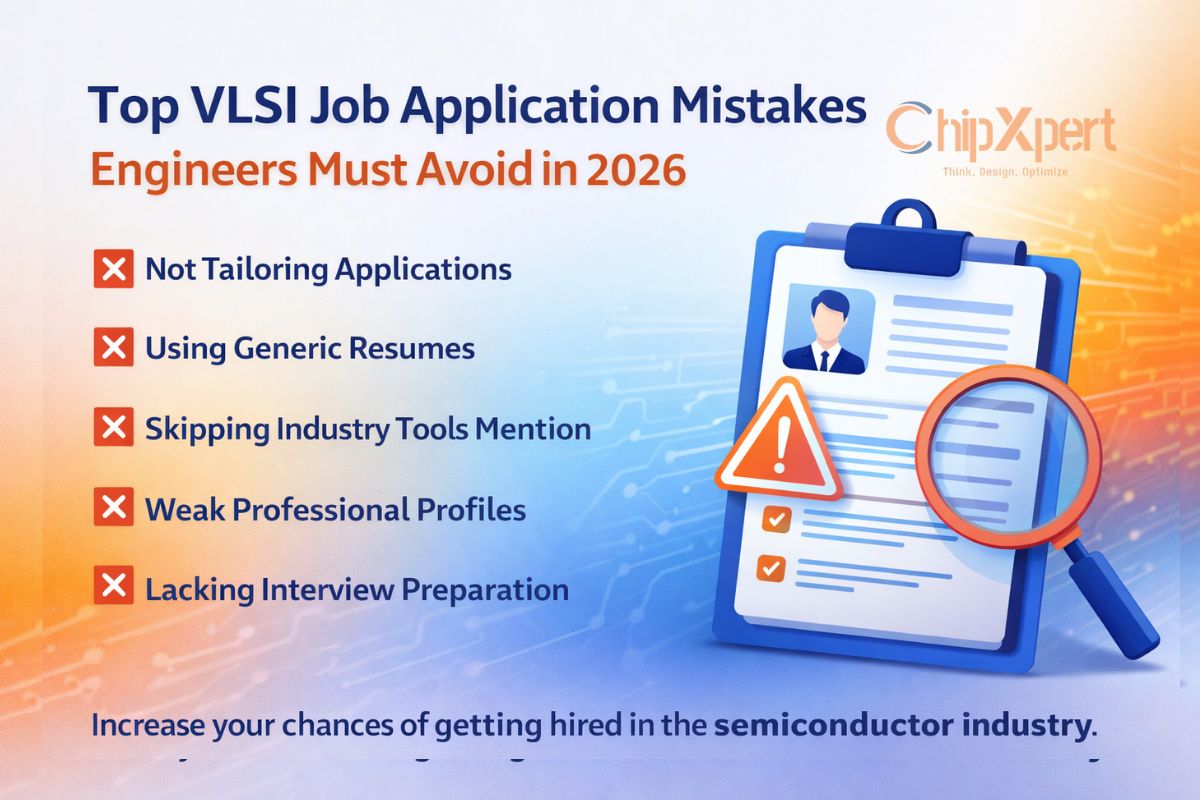
Top VLSI Job Application Mistakes
The semiconductor industry continues to expand rapidly as demand for AI chips, advanced processors, and automotive electronics increases. This growth has created thousands of new opportunities for VLSI engineers. However, many candidates still struggle to secure interviews because their job applications contain common mistakes.
In a competitive field like semiconductor design, recruiters evaluate hundreds of resumes every week. Small errors in your application can significantly reduce your chances of getting shortlisted. Understanding what employers expect in 2026 and avoiding common application mistakes can help you stand out in the VLSI hiring process.
This article highlights some of the most frequent mistakes engineers make when applying for VLSI roles and explains how to avoid them.
Applying Without Understanding the Role
One of the most common mistakes candidates make is applying to every VLSI job opening without analyzing the role requirements. VLSI jobs are specialized, and each position focuses on a different domain such as RTL design, physical design, DFT, verification, or analog layout.
Recruiters look for candidates whose skills match the exact role they are hiring for. If your resume does not align with the job description, it is likely to be rejected before reaching the interview stage.
Instead of mass applying, focus on roles that match your expertise and tailor your application accordingly.
Using a Generic Resume for Every Application
Another common mistake is sending the same resume to multiple companies without customization. Recruiters can easily identify generic resumes that are not tailored for a specific role.
A strong VLSI resume should highlight:
- Relevant design tools
- Technology nodes you worked with
- Key project contributions
- Semiconductor design methodologies
Updating your resume based on the job requirements improves your chances of passing the initial screening stage.
Not Showcasing Practical Project Experience
VLSI companies prefer candidates who demonstrate practical experience rather than only theoretical knowledge. Many applicants simply list their academic coursework without explaining their project work in detail.
When describing your projects, clearly explain:
- The design problem you solved
- Tools or languages used
- Your specific contribution
- The results achieved
For example, explaining how you improved timing closure or optimized power consumption makes your profile more convincing.
You can explore more career guidance and VLSI learning insights through the Chipxpert VLSI Blog where industry concepts and career preparation topics are discussed in detail.
Ignoring Industry Tools and Technologies
Modern semiconductor companies expect engineers to be familiar with industry-standard design tools. Many candidates fail to mention the tools they have worked with during internships or training.
Depending on the role, employers may look for experience with:
- RTL design tools
- Physical design platforms
- Verification frameworks
- Timing analysis tools
Clearly mentioning these tools in your resume helps recruiters quickly evaluate your technical exposure.
Weak Professional Online Presence
In 2026, hiring managers often review a candidate’s professional presence online before scheduling interviews. A poorly maintained professional profile can reduce your chances of being shortlisted.
Maintaining a professional profile where you showcase projects, certifications, and industry interests can significantly strengthen your application.
Staying informed about semiconductor industry developments through technical articles such as those available blog can also help you build deeper domain understanding.
Poor Communication in the Application Process
Communication plays a major role during hiring. Some candidates submit incomplete applications, ignore recruiter emails, or fail to respond professionally.
Simple actions such as writing clear emails, responding promptly, and maintaining professional communication create a positive impression.
Recruiters often evaluate communication skills along with technical knowledge.
Lack of Preparation for Technical Interviews
Many candidates focus heavily on submitting applications but fail to prepare properly for interviews. VLSI interviews often include questions related to digital electronics, CMOS fundamentals, timing analysis, and design methodologies.
Candidates who review core concepts and prepare explanations for their projects usually perform much better during interviews.
Practicing technical discussions and explaining your design decisions clearly can help you demonstrate both knowledge and confidence.
Showing Limited Interest in Learning
The semiconductor industry evolves quickly, with new design methodologies and tools emerging regularly. Recruiters prefer engineers who show curiosity and willingness to learn.
Candidates who discuss industry trends, new technologies, or recent semiconductor developments during interviews often leave a stronger impression.
Continuous learning and staying updated with industry knowledge helps engineers build long-term careers in VLSI.
Conclusion
The demand for skilled VLSI engineers continues to grow, but competition for quality positions remains strong. Many candidates lose opportunities because of simple mistakes in their job applications.
By tailoring your resume, highlighting practical experience, improving communication, and preparing thoroughly for interviews, you can significantly increase your chances of securing a role in the semiconductor industry.
Avoiding these common mistakes will help you present yourself as a capable and professional engineer ready to contribute to modern chip design teams.
Share your question in comments or talk to our mentor team for batch guidance.
Need Fee, Duration, or Demo Class Details?
Talk to our admin team for the latest batch plan and career guidance.
Contact Admin TeamAsk the Admin Team
Drop your basic question in comments: eligibility, prerequisites, tools, fee range, and placement support.
Our team reviews and responds regularly.