

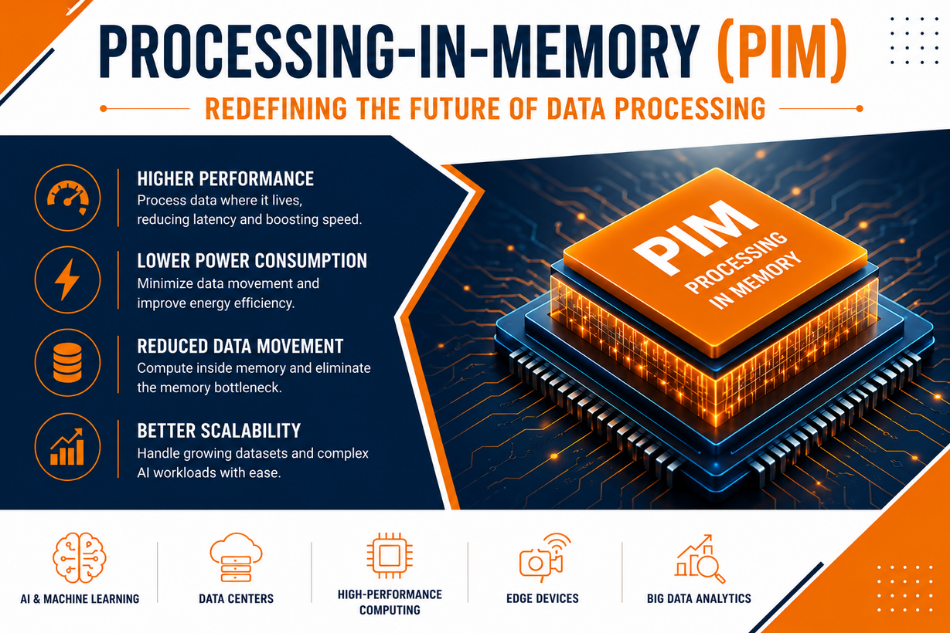
As artificial intelligence, machine learning, and data-intensive applications continue to grow, traditional computing architectures face increasing challenges. A significant amount of time and energy is spent moving data between memory and processors. Processing-In-Memory (PIM) addresses this issue by enabling computations directly within memory, reducing data movement and improving overall system efficiency.
What Is Processing-In-Memory (PIM)?
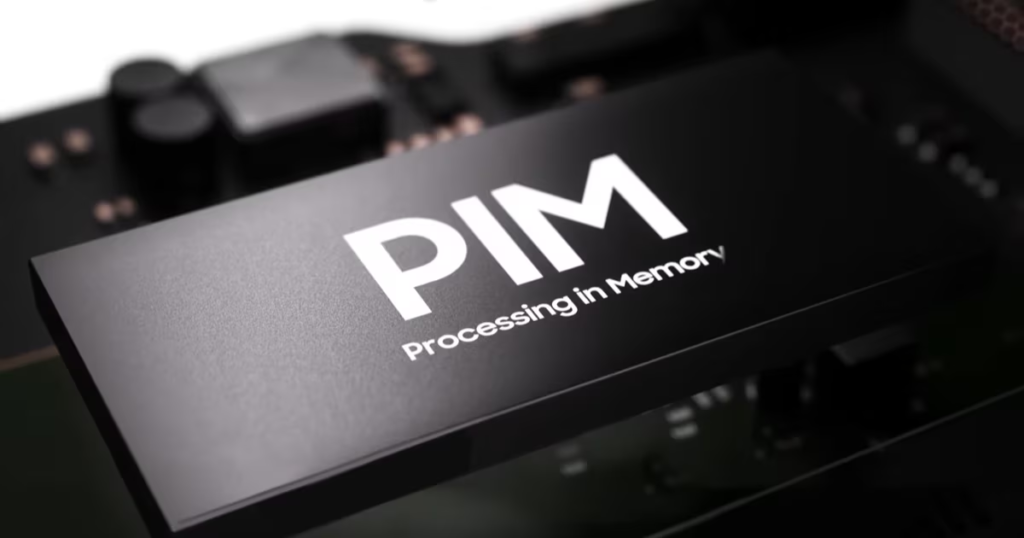
Processing-In-Memory (PIM) is a computing approach that integrates processing capabilities into memory devices. Instead of transferring data to a CPU or GPU for computation, PIM allows certain operations to be executed where the data is stored.
This architecture helps overcome the limitations of traditional systems and improves performance for data-heavy workloads.
Key Benefits of PIM
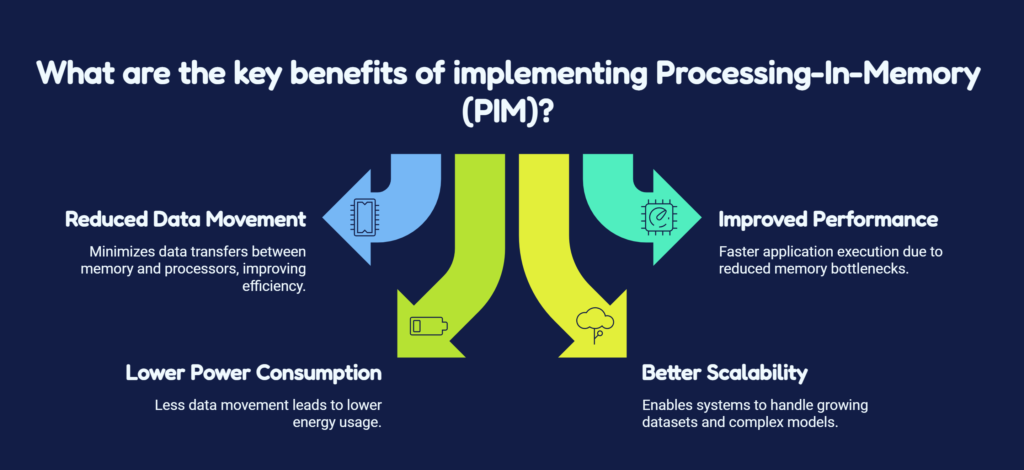
Reduced Data Movement
By processing data inside memory, PIM minimizes the need for constant data transfers between memory and processors.
Improved Performance
Applications can execute faster because memory-related bottlenecks are significantly reduced.
Lower Power Consumption
Less data movement results in lower energy usage, making PIM highly efficient for modern computing systems.
Better Scalability
PIM enables systems to handle growing datasets and increasingly complex AI models more effectively.
Major Applications of PIM
Artificial Intelligence and Machine Learning
PIM accelerates neural network processing and large-scale AI workloads.
Data Centers
Cloud service providers can improve server efficiency while reducing operational power costs.
High-Performance Computing
Scientific simulations, research workloads, and analytics applications benefit from faster data access and processing.
Edge Devices
Smart cameras, IoT devices, and autonomous systems can perform AI tasks with improved energy efficiency.
Challenges and Industry Adoption
While PIM offers significant advantages, challenges remain in software support, hardware design complexity, and standardization. However, advancements in memory technologies and semiconductor manufacturing are driving rapid adoption across the industry.
Many leading semiconductor companies are actively developing PIM enabled memory solutions for next-generation AI and data center applications.
Conclusion
Processing-In-Memory (PIM) is emerging as a transformative technology for modern computing. By bringing computation closer to data, PIM improves performance, reduces power consumption, and addresses the growing demands of AI and data-intensive workloads. As computing continues to evolve, PIM is expected to play a crucial role in shaping future semiconductor and system architectures.
Share your question in comments or talk to our mentor team for batch guidance.
Ask the Admin Team
Drop your basic question in comments: eligibility, prerequisites, tools, fee range, and placement support.
Our team reviews and responds regularly.